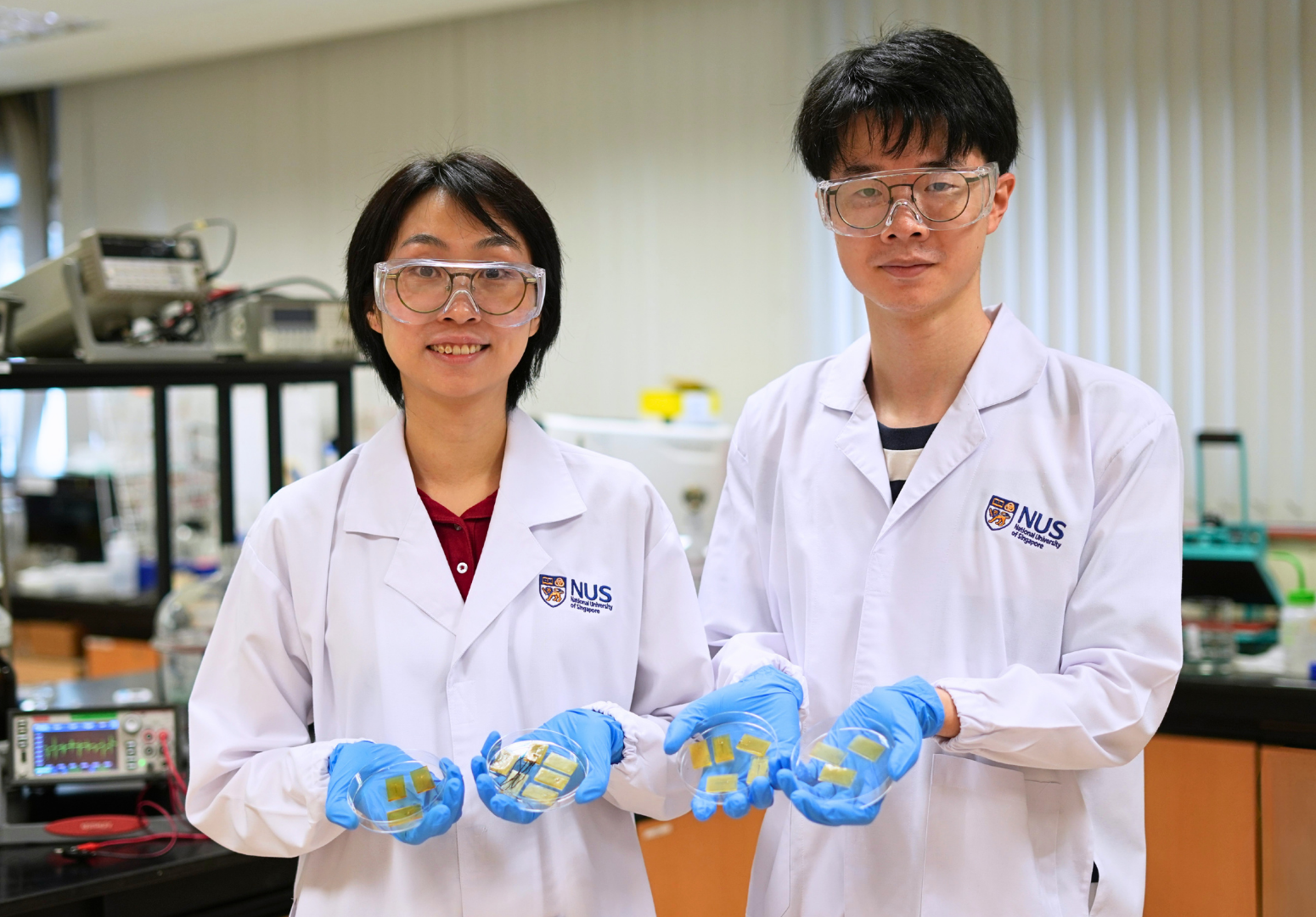






The team from the Energy & Environment Materials Research Division of the Korea Institute of Materials Science (KIMS) said it has developed a highly durable flexible perovskite solar cell material and fabrication process that remains stable even under high humidity conditions.
Perovskite could replace conventional silicon solar cells due to its excellent light absorption, low production cost, and ability to be fabricated into thin, flexible films.
However, its vulnerability to moisture has posed a major hurdle to commercialisation. Consequently, manufacturing has typically required low-humidity environments or inert gas conditions. Furthermore, ensuring mechanical durability when producing perovskite in a flexible form has remained a significant challenge.
To address these, the research team introduced a defect passivation strategy by utilising two-dimensional (2D) perovskite materials to sandwich the light-absorbing layer of the solar cell from the top and bottom.
This is said to have resulted in highly efficient, durable flexible solar cells that operate stably even under relative humidity conditions of up to 50 per cent.
The solar cells also retained over 85 per cent of their efficiency after 2,800 hours of operation. Furthermore, the devices maintained 96 per cent of their initial efficiency after 10,000 bending cycles, and preserved 87 per cent efficiency in extreme shear-sliding tests.
In a statement, Dr Dong-chan Lim, research lead at KIMS, said: “With this technology, it is now possible to manufacture high-efficiency perovskite solar cells in ambient air without costly equipment, significantly reducing production costs. In particular, the exceptional durability of the flexible devices makes them promising candidates for applications in wearable electronics and vehicle-integrated solar power systems.” [Source: Korea Institute of Materials Science]