





Operating electronics in the deep ocean is notoriously difficult. A single puncture usually ruins an underwater sensor, leaving divers and marine robots with failing equipment and zero options for on-the-spot repair.
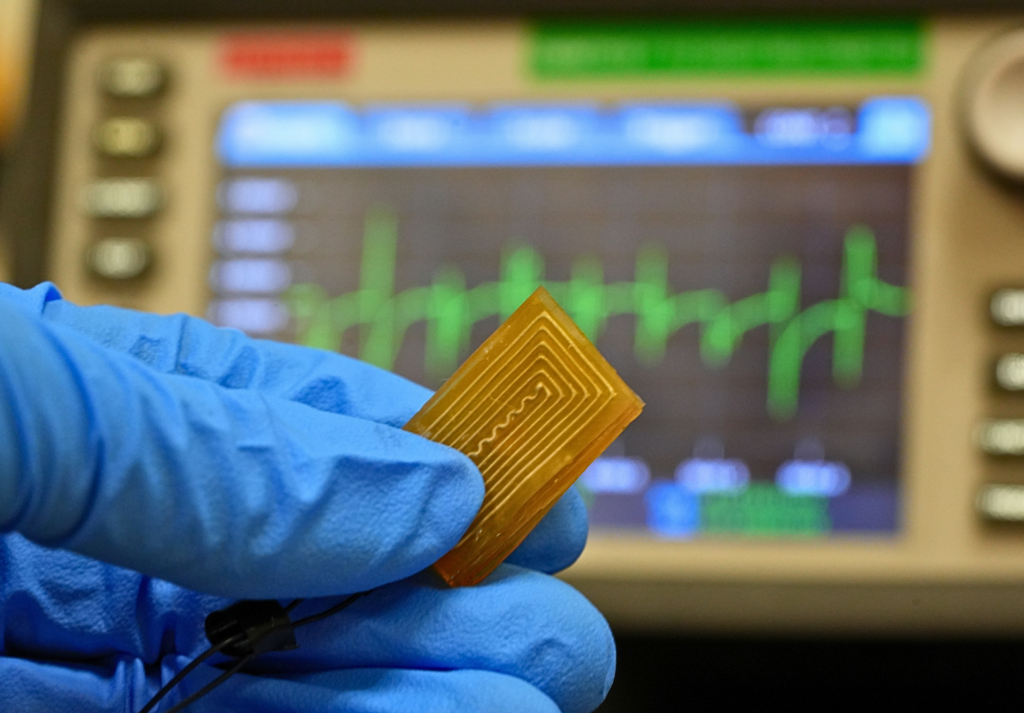
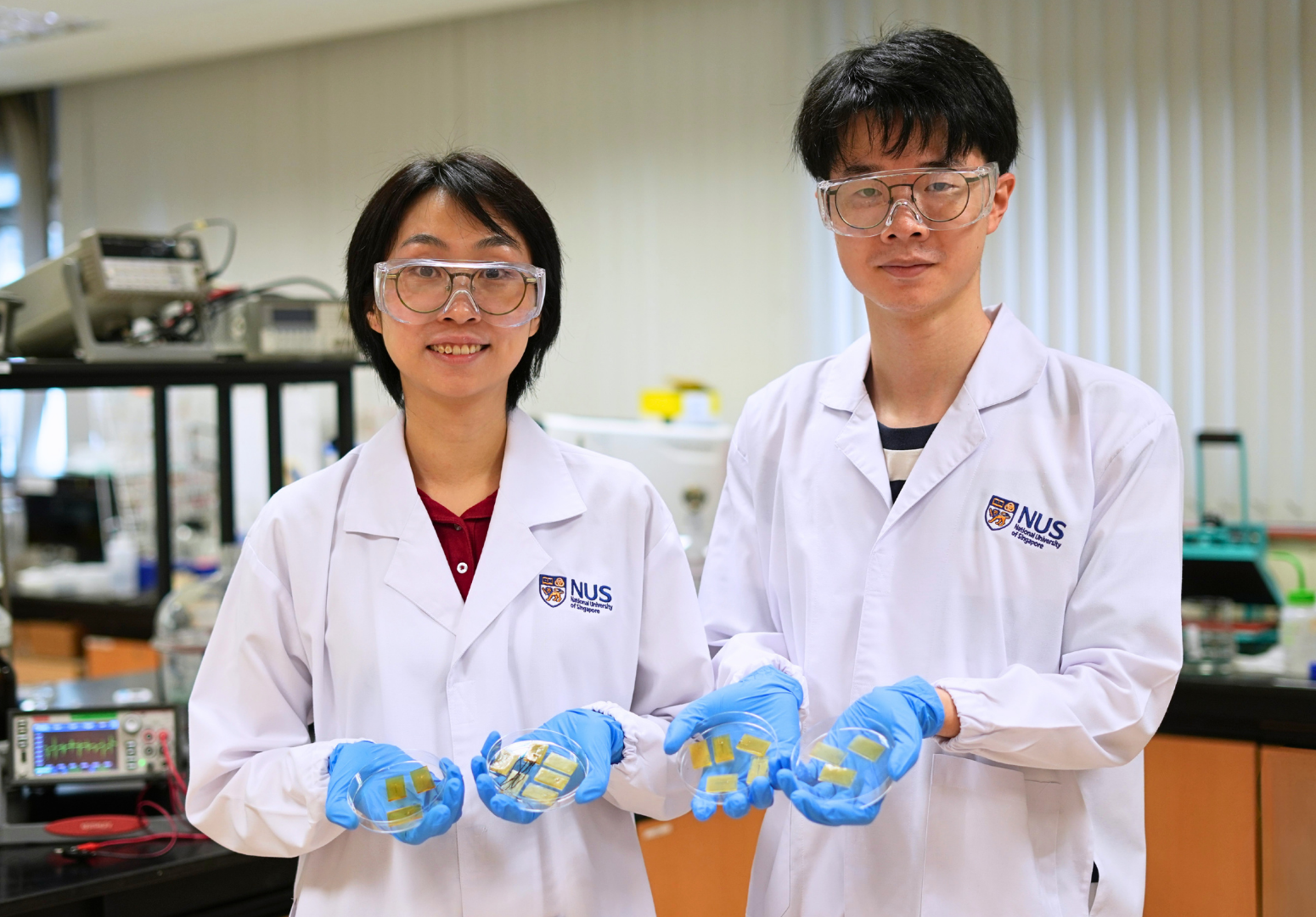
Now, a research team at the National University of Singapore (NUS) has engineered a game-changing solution: a self-healing, self-powered electronic skin that functions just like living tissue.
Published in Advanced Materials, the Self-healing Magnetoelectric Sensory System (SMES) can sense its surroundings, detect its own structural damage, and completely repair itself autonomously—even while fully submerged in seawater.
Mimicking Human Pain and Healing
Led by Assistant Professor Tan Yu Jun from the Department of Mechanical Engineering at the College of Design and Engineering, NUS, the team built the sensor by stacking layers of a highly stretchable elastomer laced with liquid-metal conductors.
- The “Pain” Response: When the material is cut, pricked, or punctured, its electrical resistance instantly spikes. This acts exactly like a biological pain response, immediately alerting the system to the location of the injury.
- Autonomous Repair: Built with reversible molecular bonds, the skin naturally knits back together when damaged edges touch. Needle pricks heal completely on their own within seconds, while more severe slices regain full functionality after brief mechanical pressure.
- Submerged Success: While most materials struggle to bond when wet, the SMES skin achieves nearly 100% healing efficiency underwater within 10 days.
Powered by Physics, Not Batteries
Batteries are a massive vulnerability in deep-sea environments. The SMES system bypasses this limitation entirely by generating its own electricity through electromagnetic induction.
Inside the skin, a tiny magnet sits adjacent to a liquid-metal wire coil. When an object presses the sensor or moves near it, the magnet shifts, inducing an electrical voltage. This allows the device to offer both tactile (touch) sensing and contactless proximity sensing without requiring a single battery.
[Source: NUS]